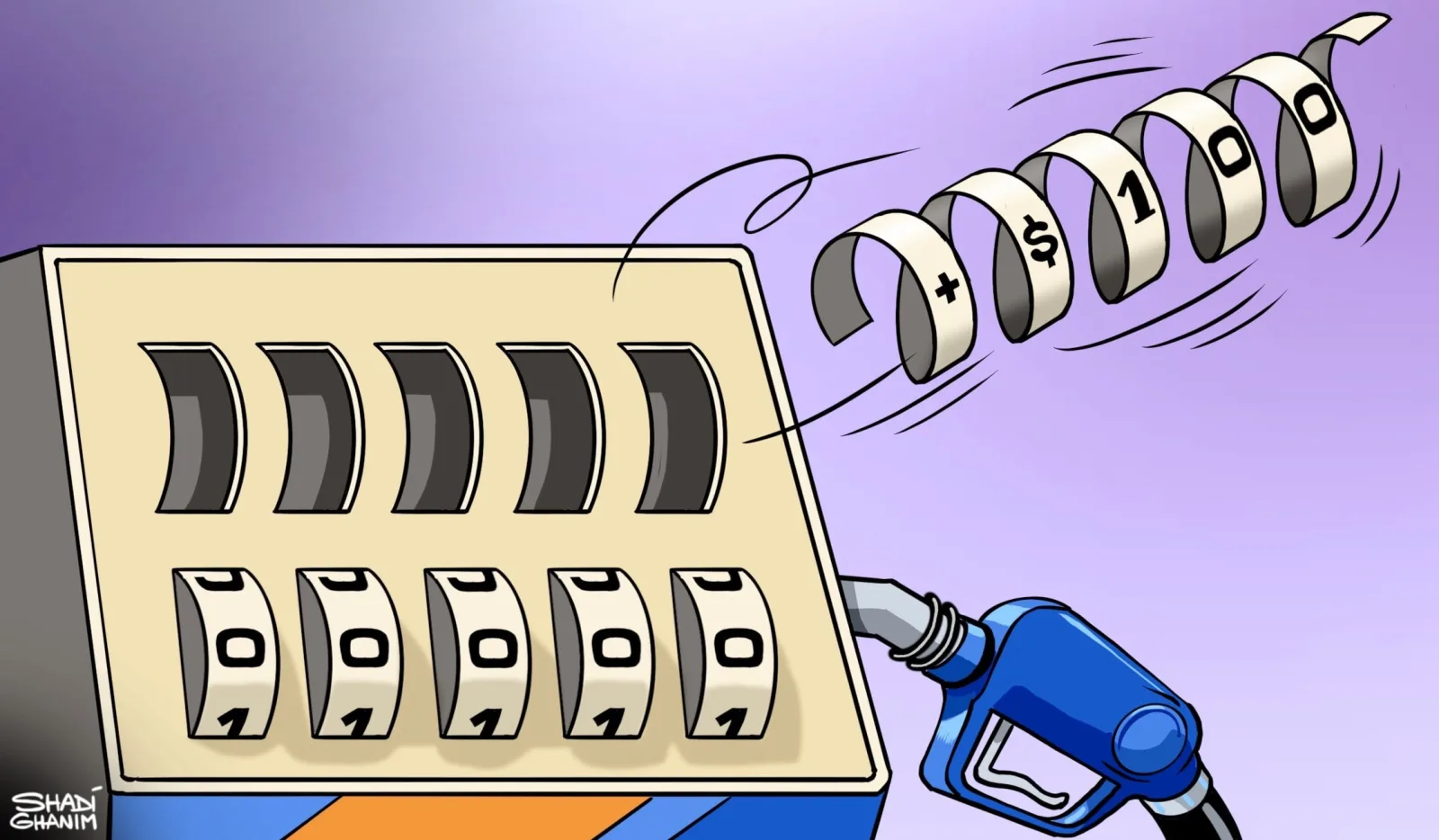
The substantial increase in fuel prices over the recent weekend in Syria has resulted in widespread protests across the country. These protests are considered one of the largest demonstrations since the fall of Bashar al-Assad two years ago.
Details of the Fuel Price Increase
The Syrian government on Saturday raised the price of diesel by 40 percent, bringing it to 175 Syrian pounds (equivalent to $1.32) per liter. This price increase has put more pressure on the Syrian people who have faced a severe economic crisis in recent years. Estimates from the United Nations Development Program indicate that 90 percent of the Syrian population lives below the poverty line, whereas this figure was about one-third before the civil war began in 2011.
Read more: UAE Investment in Germany: A €40 Billion Promise for a Bright Future
Reactions and Social Consequences
Protesters set tires on fire and blocked key roads, including the highway connecting the capital Damascus to the industrial center of Aleppo. Additionally, convoys carrying crude oil to central Syrian refineries were also halted. Some protesters called for the dismissal of the ministers of energy and economy, as well as the head of the Syrian Oil Company. Yasser Saleem, one of the protesters in Aleppo, stated: "We do not want higher wages. All we want is a reduction in the price of diesel and other fuels."
Meanwhile, the spokesperson for the Ministry of Energy, Abdulhamid Salah, announced that this price increase is a temporary measure due to rising global supply costs and Syria's heavy dependence on imports, and it may be reviewed as conditions change.
Economic Factors and Global Impacts
Syria is heavily reliant on Russian crude oil, importing about 60,000 barrels per day from the country this year. However, Damascus has informed Washington that it is prepared to significantly reduce its purchases. This supply remains under increasing pressure; as Ukrainian attacks on Russian refineries have reduced production, and Moscow has limited gasoline and diesel exports. Prices have been affected not only by crude costs but also by shortages of refined products and rising costs of refining, transportation, and supply.
This supply shortage has also been exacerbated by the three-month shutdown of the Baniyas refinery, Syria's largest refinery, for the first time in its comprehensive maintenance operations. Following this increase, the price of 95-octane gasoline has risen by about 86 percent since February, and the price of diesel has more than doubled. The price of Brent crude oil has also increased from $72.48 to $104.61 per barrel.
Imad Aboulras, a 44-year-old taxi driver, stated that passengers have protested the fare increases and added: "Now the prices of vegetables and other goods will also rise with the increase in fuel prices. What solution is there? Theft? We cannot steal."
Read more: New US Sanctions on Russia's VTB Bank Due to Financial Ties with Iran · Iran War; A Crisis That Puts the Persian Gulf in a State of Insecurity