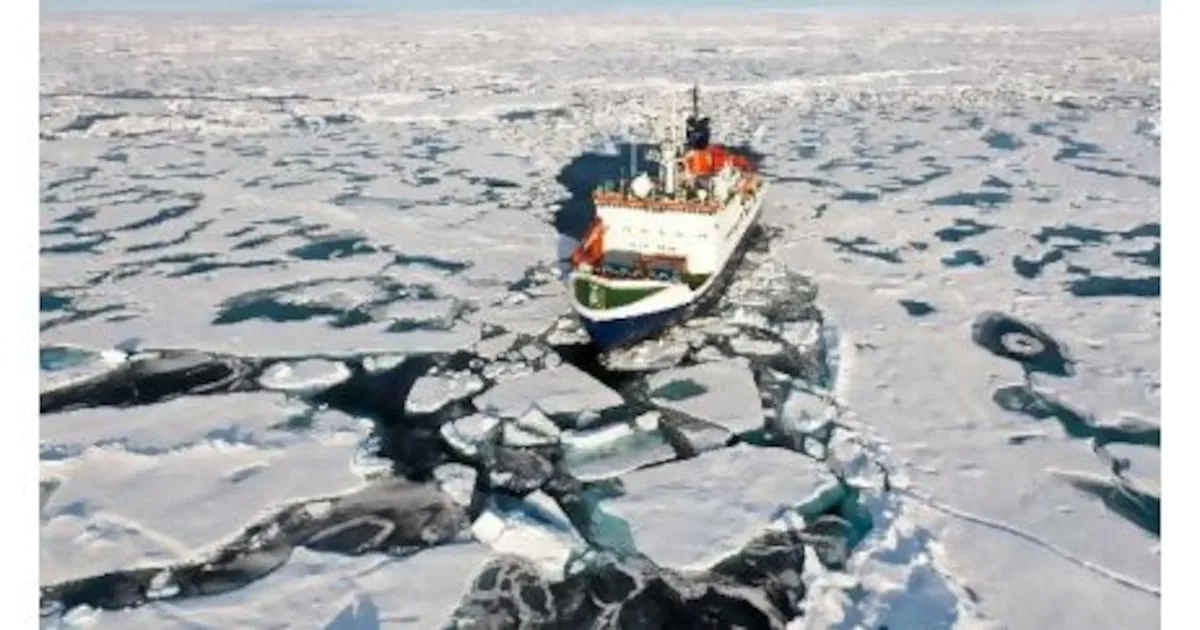
The Northern Sea Route (NSR) is emerging as an attractive option for international transportation. With the reduction of ship traffic through the Strait of Hormuz and the vulnerability of the Red Sea routes and the Suez Canal due to existing threats, more attention has been drawn to this alternative route. The main advantage of this route is that during times when the sea is navigable, ships can make their journey from Northeast Asia to Northwest Europe in about 20 days, which is almost half the time required for a journey through the Indian Ocean and then the Suez Canal.
Development of the Northern Sea Route
In 2018, China announced itself as a "near-Arctic state" and introduced the concept of the "Polar Silk Road" as part of the Belt and Road Initiative. Despite most analyses being pessimistic about this project, earlier this month a Chinese ship completed the first regular commercial service (albeit seasonal) through the Arctic, arriving at the port of Teesport in the UK on September 9. This ship was carrying advanced technology goods produced in China and is considered the first voyage of a total of eight planned trips between August and October this year. A few days later, a South Korean ship also passed through this route and reached the port of Felixstowe in the UK after 21 days.
Read more: The United Arab Emirates condemned the Houthi group's attacks on Saudi civilian facilities
Challenges and Opportunities of the Northern Sea Route
The President of South Korea, Yoon Suk-yeol, congratulated this achievement and referred to it as the beginning of a historic route. He had approved the development of maritime transport in the Arctic as a national policy a year ago. Additionally, India has planned to send a test ship through the NSR next year. Vietnam has also been invited to participate in the development of the polar transit transport corridor, which includes the NSR.
Although the number of ships passing through this route is still low (103 trips last year compared to 12,758 trips through the Suez Canal), this marks the beginning of a significant transformation in global maritime transport. With rising temperatures in the Arctic and improved conditions for ship passage, time is on the side of the NSR. A study in 2024 predicted that the Arctic Ocean may experience a day without ice before 2030.
However, there are also challenges along this route. South Korean ships were forced to make overnight stops at one point to avoid floating ice. Moreover, the frozen north of Russia, as the closest land along the route, is severely underdeveloped, and insuring ships will be very high due to the difficulty of assisting endangered vessels. Environmental activists also warn of potential risks to vulnerable ecosystems and the possibility of oil spills.
Despite these challenges, East Asian countries, particularly India and South Korea, are seeking to exploit this route as a strategic option to reduce dependence on traditional Western logistics chains. According to Maxim Dunkin, project manager for Arctic development at the Indian Research Center, the NSR can be considered a strategic necessity for countries like India. At the same time, countries sanctioning Russia do not want to pay for passage through waters that Moscow considers its internal waters.
Ultimately, the Northern Sea Route or "Polar Silk Road" is unlikely to ever replace the Suez Canal, but in circumstances where maritime disruptions in the Persian Gulf have catastrophic impacts on global economies, this option could be welcomed.
Read more: Saudi Arabia intercepted a Houthi drone before it entered Mecca · Search continues for 129 missing after ship capsized in the Java Sea