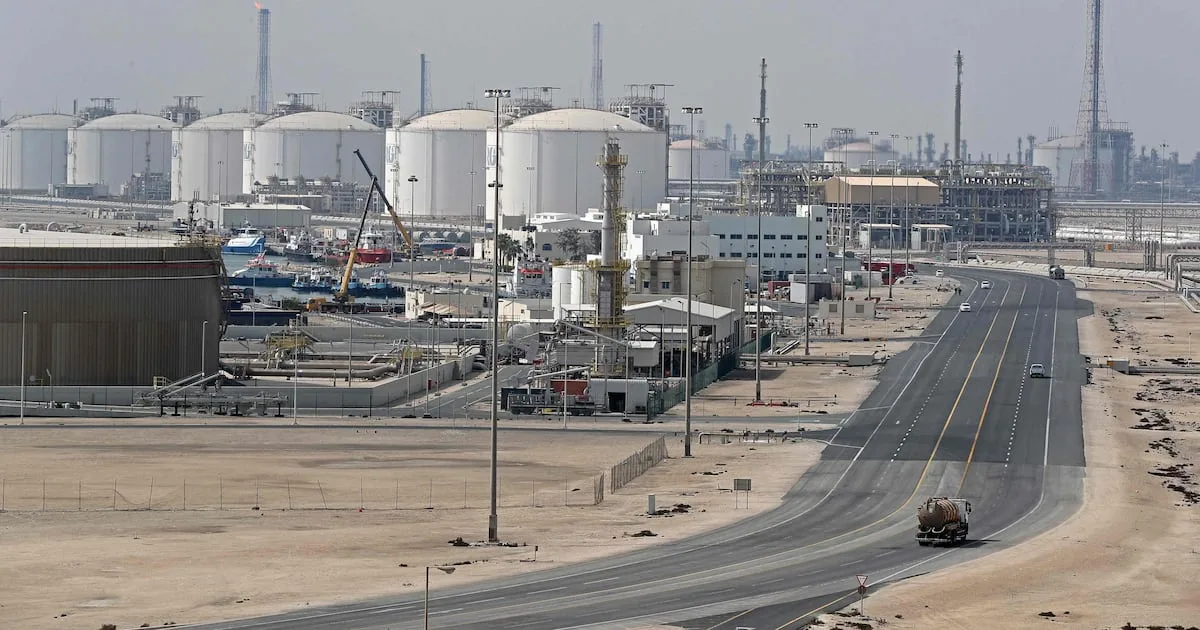
The reopening of the Strait of Hormuz will not assist Qatar and UAE's liquefied gas exports, and according to gas industry executives, damaged facilities and high insurance costs will restrict supply for a long time. About 17 percent of Qatar's LNG capacity has been offline due to Iranian attacks on its two export facilities, removing 12.8 million tons per year from the market.
Long Repair Times
Qatar Energy has announced that repairs to the damaged facilities will take between three to five years. This means that even if the Strait of Hormuz reopens safely, only a portion of the supply prior to the war will return to the market. Cedric Cremers, head of integrated gas at Shell, said at the GasTech conference in Bangkok, "First, we have reopening, and then we have rebuilding. These are still very different issues." He added that even with the reopening of the Strait of Hormuz, previous flows will not quickly return to normal.
Read more: Entering a New Era of Energy Disorder
Transport Limitations
The Strait of Hormuz is the only exit route for Qatar and UAE's LNG to global markets, and there are no alternative pipelines or sea routes. Nearly one-fifth of global LNG trade in 2024 passed through this strait, almost all of which came from Qatar and the UAE. Additionally, LNG carriers are slowly returning to the Persian Gulf due to high war insurance costs and security concerns. Cremers emphasized that even with safe passage, restoring regular maritime flows will be time-consuming.
Shell's liquefied gas plant in Qatar, which had two units targeted in the early months of the seven-month war, is expected to return to operational status by the end of the first quarter of 2027. Cremers added, "It's not just about rebuilding production capacity, but restoring actual maritime flows will also take time."
To date, 36 million tons of supply from Qatar and the UAE have been absent from the market. Of this amount, about 20 million tons have been compensated through new supplies from the United States and Canada, while the rest has been due to reduced demand and withdrawals from reserves. The global LNG market faced a lesser supply shortage in February, and additional capacities were insufficient for the first time in nearly a decade.
High price rates in Asia and Europe have weakened purchasing countries and increased competition for securing alternative shipments. For example, India sourced about 75 percent of its LNG from the Strait of Hormuz in 2024.
While Qatar is preparing for a long-term shortage, Qatar Energy is seeking multi-year LNG contracts from the United States until 2031. This move reflects Doha's expectation of continued limitations on damaged capacity, especially after the reopening of the Strait of Hormuz.
Read more: Unprecedented Oil Price Volatility: Will Prices Exceed $120? · UAE Condemns Attack on Saudi Oil Pipeline