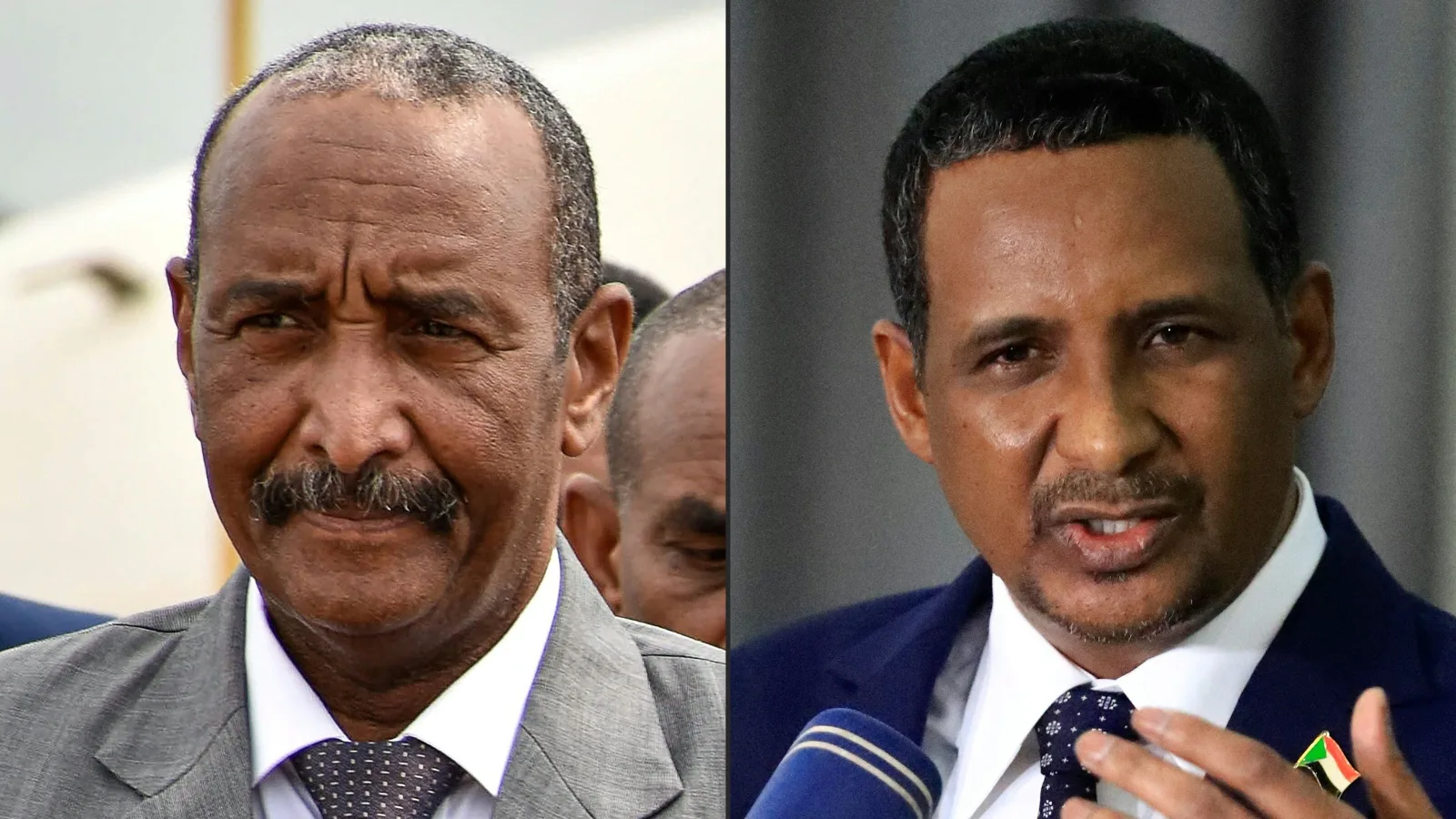
Washington has increased pressure on two generals involved in the civil war in Sudan, particularly General Abdel Fattah al-Burhan, the head of the Sudanese Armed Forces, and General Mohamed Dagalo, the leader of the Rapid Support Forces, stating that neither can have a role in the country's future. Massad Bolus, the U.S. representative for Arab and African affairs, emphasized that there is no "future" for these two military leaders.
New Developments in U.S. Diplomacy
Washington supports the ceasefire plan agreed upon last year, which includes the UAE, Saudi Arabia, Egypt, and the United States. However, Bolus acknowledged that these efforts have not yet yielded results. In recent weeks, Washington has moved towards a firmer approach against the two warring leaders, including calls for a UN arms embargo for all of Sudan and the imposition of new measures against the Sudanese government due to the use of chemical weapons.
Read more: Sheikh Mohammed bin Zayed Al Nahyan congratulated the President of El Salvador on Independence Day
Humanitarian Situation and Ongoing Crises
Given the dire humanitarian situation in Sudan, which has resulted in the deaths of tens of thousands and the displacement of millions, General al-Burhan continues to insist on continuing the war until the Rapid Support Forces are defeated. This war has created one of the largest humanitarian crises in the world, with estimates indicating that 20 million people in the country are suffering from hunger. Year-long diplomatic efforts have yet to bear fruit, and Bolus referenced this issue in his remarks in Dubai.
These developments indicate fundamental changes in Washington's approach to the Sudan crisis and the country's military leadership. While pressures are increasing, the future of negotiations and the likelihood of al-Burhan and Dagalo sitting at the negotiating table remains uncertain. Analysts believe that the shift in focus towards the SAF does not imply a better assessment of the RSF in this conflict, and both sides are not independent in their decision-making due to their dependence on armed groups and other political forces.
Read more: Saudi airstrike on Emirati forces in Yemen · UAE warns Netanyahu; major Hamas attack was imminent