China and the United States are currently in the midst of a serious competition for rare earth supply. The halt of some Chinese exports to the United States in 2025 highlights vulnerabilities that governments have been trying to mitigate for years. Several Chinese companies have recently refused to ship materials to the United States, occurring just before an important meeting between the President of the United States and the President of China.
Economic Impacts and Supply Chain
These developments indicate that the global rare earth issue is not limited to finding mineral reserves. China continues to dominate the processing and refining of rare earth elements and the production of permanent magnetic fields made from these elements. These magnetic fields are essential for electric vehicles, wind turbines, motors, and military systems.
Read more: Dubai has dropped in the ranking of international financial centers
The comparison between rare earth elements and oil is tempting but misleading. Oil is consumed as fuel, whereas rare earth elements are typically used as industrial inputs and incorporated into products. This means that eliminating the consumption of rare earth elements is not necessarily the goal; rather, the aim is to ensure that the supply chain is resilient enough that a country cannot halt an industry by restricting a few minerals.
New Challenges and Solutions
Recent analyses indicate that U.S. efforts have reduced China's share in global rare earth processing from about 90 percent in 2023 to nearly 85 percent in 2025. However, estimates from the International Energy Agency suggest that China's share may reach around 70 to 73 percent by 2035. This clearly demonstrates China's dominance in rare earth processing.
In April 2025, China imposed export restrictions on several rare earth elements and permanent magnetic fields. These restrictions disrupted the supply of raw materials for automakers, aerospace companies, and semiconductor manufacturers, forcing companies to seek alternative suppliers. Additionally, in July 2026, China added 14 European entities to its export control list.
The message for Western industries is clear: having a mine outside of China does not necessarily guarantee independent supply. If the mineral still needs to be sent to China for separation, refining, or the production of magnetic fields, the supply chain remains at risk.
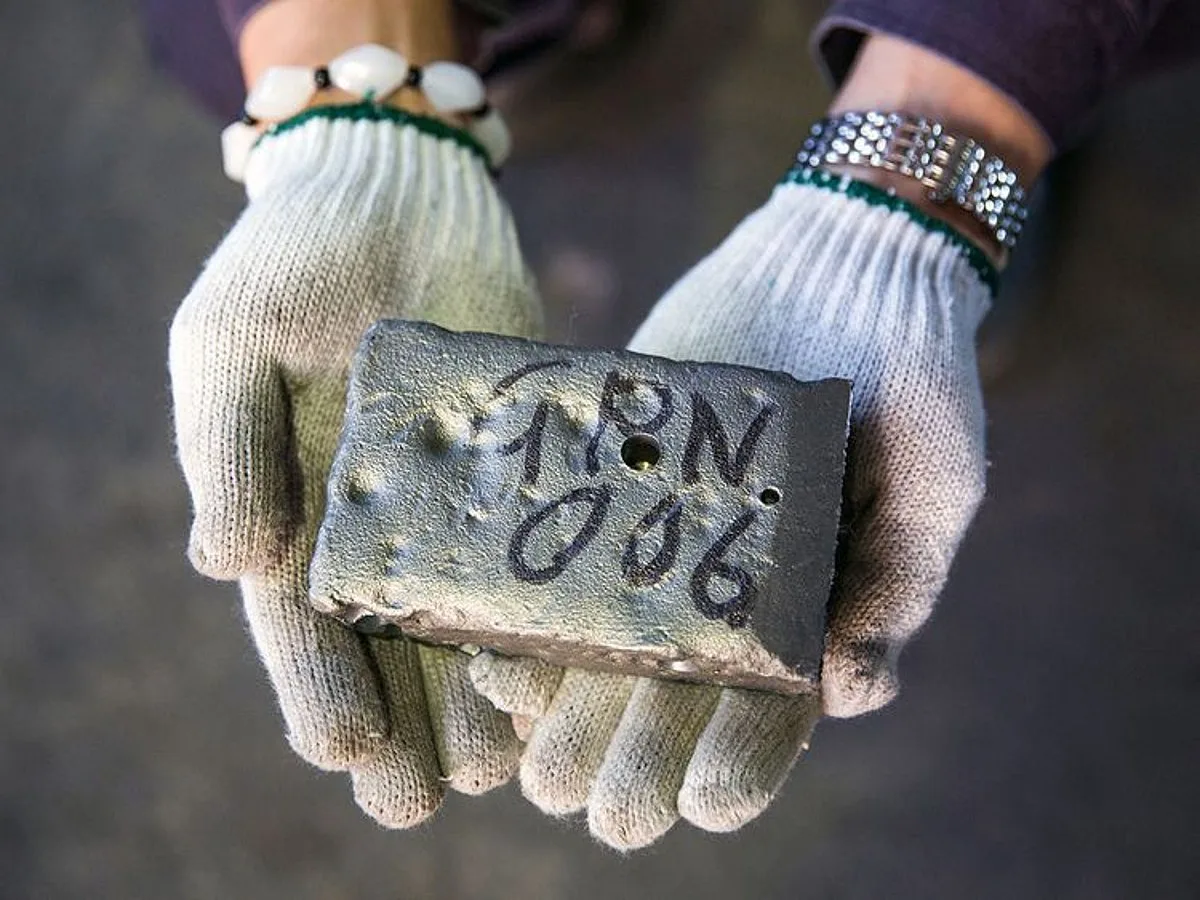
One of the clearest examples is the rare earth element yttrium, which is used in aerospace applications and semiconductor production. As the main supplier of this element, China has disrupted the supply of raw materials for industries in the United States and Japan with stricter controls.
Read more: Suez Canal Authority: COSCO resumes south-to-north transits · China's robotic skin industry has reached mass production