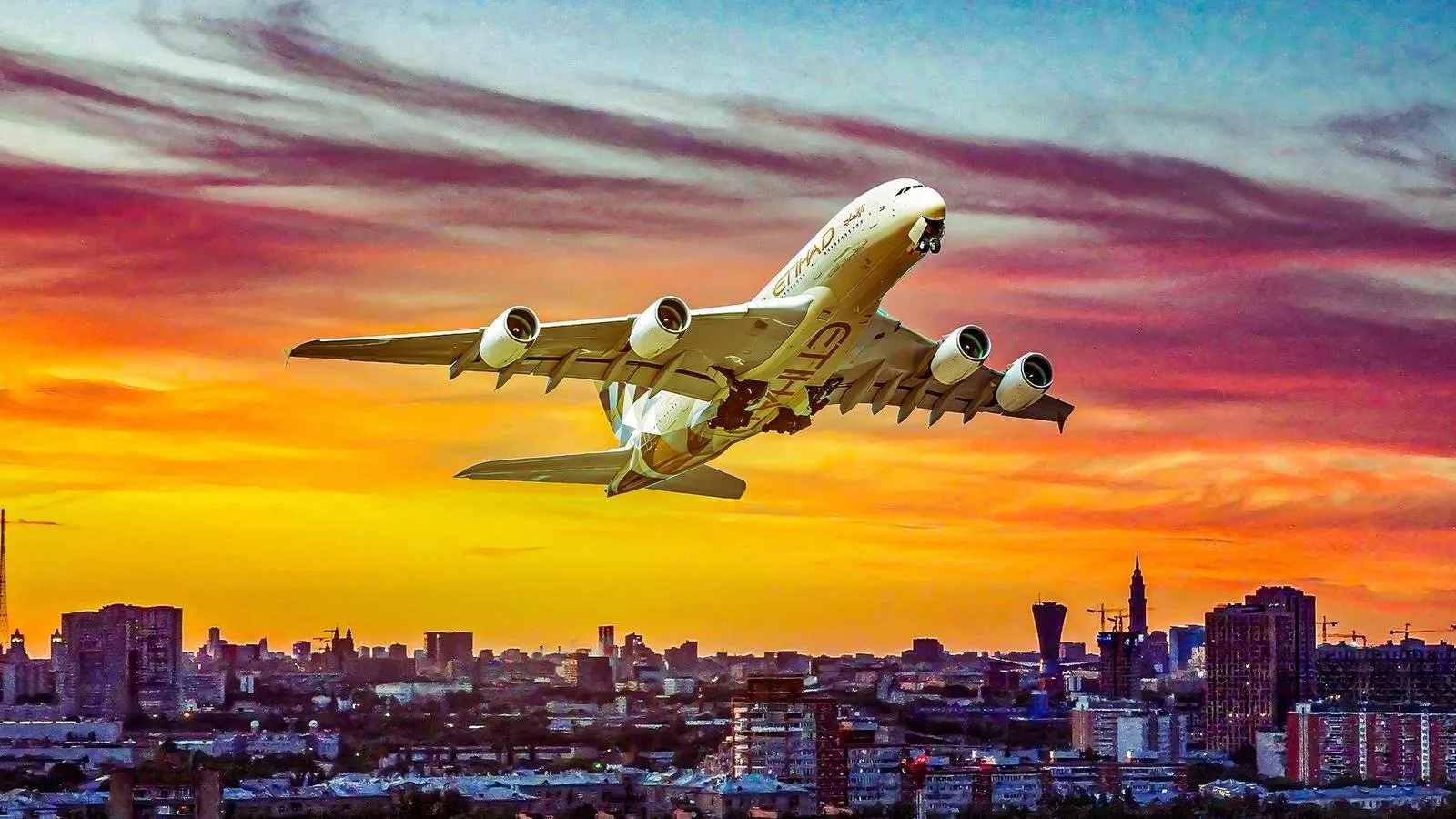
Etihad Airways has adopted a new approach in utilizing its widebody fleet, changing its strategy by placing larger aircraft on routes with the highest demand. This action is particularly evident in key markets, where the Abu Dhabi-based airline uses Airbus A380 and Boeing 777 aircraft to respond to changes in passenger demand.
New Strategy in the Summer 2026 Flight Schedule
The summer 2026 flight schedule reflects this strategy. Paris will be served with two daily Airbus A380 flights and one Boeing 787-9 flight starting July 1, 2026, while Tokyo will be covered with a daily A380 flight. Additionally, Dhaka has been added to this list with annual Boeing 777 flights following the success of its initial launch. Meanwhile, some low-demand routes have been assigned to Airbus A321LR and even A320 services.
Capacity Increase at Key Airports
The increase in capacity at Charles de Gaulle Airport (CDG) in Paris clearly demonstrates Etihad's demand-driven approach. The airline has made a significant commitment to this market by offering three daily flights between Abu Dhabi International Airport (AUH) and Paris, with two flights from Airbus A380 and one flight from Boeing 787-9. This move has been described as an increase in luxury travel capacity between Abu Dhabi and the French capital.
The Airbus A380, as the flagship of Etihad's fleet, features four cabins including The Residence, First Apartments, Business Class, and Economy. Senior Vice President of Revenue and Commercial, Arik De, described this twice-daily operation with A380 as a "statement of confidence" in this market.
Analysis of Different Markets and Diverse Approach
While Paris and Tokyo are recognized as popular and luxury markets, Dhaka is presented as a contrasting example. Instead of using the A380, Etihad launched the Abu Dhabi-Dhaka route with the Boeing 777 and quickly decided to continue this route on an annual basis. The initial flight on June 26, 2026, was fully booked, and the airline confirmed that this service would continue annually due to strong demand.
The 777 operation is planned to operate four times a week with 28 business class seats and 374 economy seats. This flight particularly addresses the needs of foreign workers and their families, and also facilitates significant cargo transport between the two countries, making the economy of this route extend beyond travel tickets.
The Role of Strategy in Demand Management
Etihad's strategy reflects the airline's ability to respond to changes in demand. A route can be expanded by increasing the number of flights, utilizing larger aircraft, or planning seasonally. The decisions announced for 2026 demonstrate Etihad's success in leveraging these levers. This is particularly evident in the case of Dhaka, where capacity decisions connect to multiple revenue sources.
Ultimately, the A380 allows Etihad to offer services that cannot be replicated with smaller aircraft. This approach means that Etihad smartly utilizes its existing capacities to adapt to the needs of each market.