The Pentagon is examining significant changes in the way it deploys its military forces in Europe and the Middle East. These actions are part of the U.S. national defense strategy under the Trump administration, aimed at reducing focus on these regions and increasing attention to China and combating drug cartels in South America.
Troop Status in the Gulf
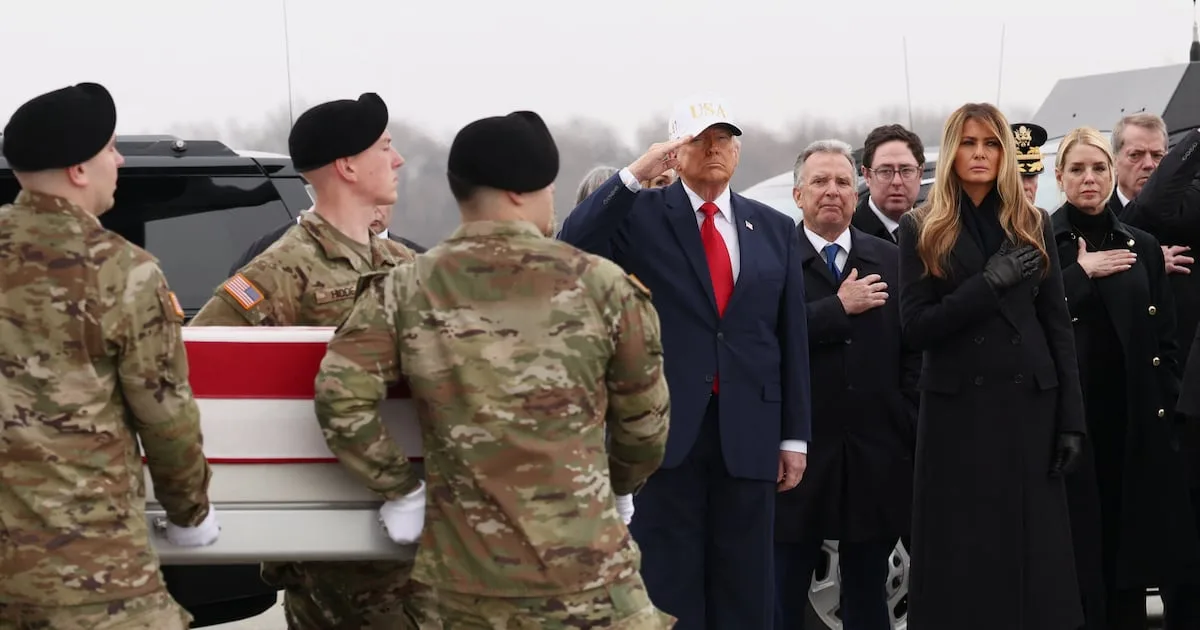
The war with Iran has shown how vulnerable the forces stationed in this region are. In this war, at least 18 American soldiers have lost their lives, including six in Iran's missile attack on the port of Shuaiba in Kuwait. Reports indicate that Iranian attacks on U.S. infrastructure and military facilities in Kuwait, Bahrain, Qatar, the UAE, Saudi Arabia, Iraq, Oman, and Jordan have caused significant damage.
Read more: The U.S. has authorized the sale of 48 F-35 fighter jets to Saudi Arabia
Published reports indicate that Pentagon officials have not yet made a decision regarding the return of troop levels and bases to pre-war status. According to this report, the Pentagon has not yet determined what the future status of its forces in this region will be and what proportion of the costs of building bases will be covered by allied countries.
Review of Troop Deployments
The Pentagon is considering whether to withdraw its forces from the Gulf. Currently, about 40,000 American personnel are stationed in this region. According to an official, Defense Secretary Peter Hegseth has not yet issued an order for a formal review of troop status in the Middle East.
At the same time, the Pentagon intends to transfer MQ-9 Reaper drones, which are currently operating in Africa, to South America for use in anti-drug operations. Hegseth announced in June that a six-month review for Europe is underway, focusing on the size and deployment of American forces in the region.
This review, led by Elij Brodkubi, Deputy Secretary of Defense for Policy, seeks to place greater emphasis on deterring China. One option under consideration is to reduce about 25,000 troops from Europe, which could raise concerns for European and NATO officials, especially as Russia has become increasingly challenging.
Currently, about 80,000 American soldiers are stationed in Europe. Reducing troops in these areas could free up resources for other priorities, but it also raises questions about the deterrent capability of the United States in these regions and the reliability of Washington's commitments.
Senator Jeanne Shaheen, the Democratic chair of the Senate Foreign Relations Committee, has urged Marco Rubio, the Secretary of State, to ensure that American diplomats are involved in the Pentagon's review of U.S. military presence in Europe. In a letter to Rubio, who is also the U.S. National Security Advisor, she wrote that diplomats, including U.S. ambassadors in potentially affected countries, have been sidelined from consultations.
A State Department official denied this claim, stating that diplomats are indeed providing counsel. Shaheen also pointed out that changes in troop levels could impact bilateral relations, which the State Department must manage, especially for Baltic countries like Estonia, Latvia, and Lithuania.
European leaders have warned of the occurrence of hybrid incidents often attributed to Russia. These incidents typically fall below the threshold of conventional military attacks but undermine European security, such as sabotage, arson, and airspace violations using drones.
Read more: The U.S. has confirmed the sale of 48 F-35 fighter jets to Saudi Arabia · The UAE condemned the attack on the Saudi oil pipeline