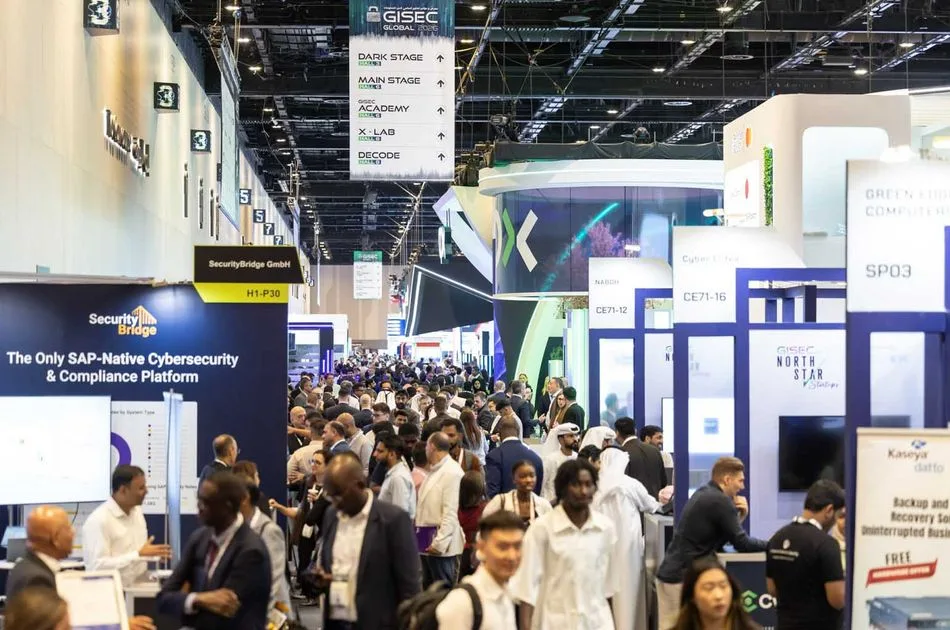
The first day of GISEC Global 2026 in Dubai presented a content-rich program that focused on new threats arising from artificial intelligence, national cyber resilience, and the protection of critical infrastructure. International experts examined the technologies and geopolitical forces shaping the cybersecurity landscape.
Artificial Intelligence and Changes in Cyber Threats
In the main session, discussions were dedicated to how artificial intelligence is changing cyber defense and cybercrime. In this session, Dr. Mohammed Al-Kuwaiti, Chairman of the UAE Cybersecurity Council, explored the strategic implications of AI-based cyber threats and emphasized that critical infrastructure remains the primary target of these threats. He stated that cyber resilience is increasingly dependent on national and economic security, and cybersecurity requires collective defense. He said, "The culture of cybersecurity is everyone's responsibility. Our first line of defense remains the community."
Read more: China launched nine satellites into orbit from the shores of Shanghai
The Importance of Identity Verification and Content Control
In his keynote speech titled "The Deepfake Decade: What Hollywood Learned Early," Michael Kelly, Emmy-nominated actor, highlighted the challenges posed by AI-generated deepfakes regarding identity, consent, and trust. He emphasized the importance of identity verification, content validation, and meaningful control over the use of AI-generated media. He said, "Your voice and your likeness are your identity. No one should use them without your knowledge and consent."
Alongside theoretical discussions, the exhibition also pointed to the increasing importance of cyber resilience. Ayman Hamoudeh, Chief Sales Engineer at Cohesity, stated, "Artificial intelligence has changed how organizations operate and compete, introducing a new type of risk. The same AI that enhances productivity can inadvertently disrupt operations and jeopardize valid data. Protecting AI is no longer just about securing models; it requires protecting its agents, memory, data, and underlying systems."
Protecting Critical Infrastructure and Cyber Resilience
The first day also addressed the practical realities of protecting critical sectors. Sessions including "Practical Resilience in Oil and Gas" and "Cyber Resilience in Critical Infrastructure" examined how damaged OT environments, sensor inputs, and digital twins affect cyber risk. Khaled Al-Taniji, Head of Cybersecurity at ENOC Group, stated that organizations must assess cyber risk from the perspective of business, operational, and safety consequences, rather than just viewing it as a challenge between IT and OT.
National Security and International Cooperation
The integration of cybersecurity, national security, and digital sovereignty continued at the cybersecurity congress hosted by the UAE Cybersecurity Council. These discussions focused on international cooperation, governance cyber capabilities, and securing rapidly evolving digital economies. In the session "Building the Safest City in the World in the Era of AI-Based Threats," Amer Sharaf, CEO of the Cybersecurity Systems and Services Division at the Dubai Electronic Security Center, examined Dubai's approach to resilience.
GISEC Global 2026 will continue until September 18 at the Dubai Exhibition Center, with upcoming days focusing on AI security, critical infrastructure, cloud security, and emerging technologies.
Read more: Meta announced the launch of smart glasses without a camera named 'Luna' · Dubai real estate market rebounds 38% from its lowest three-year level