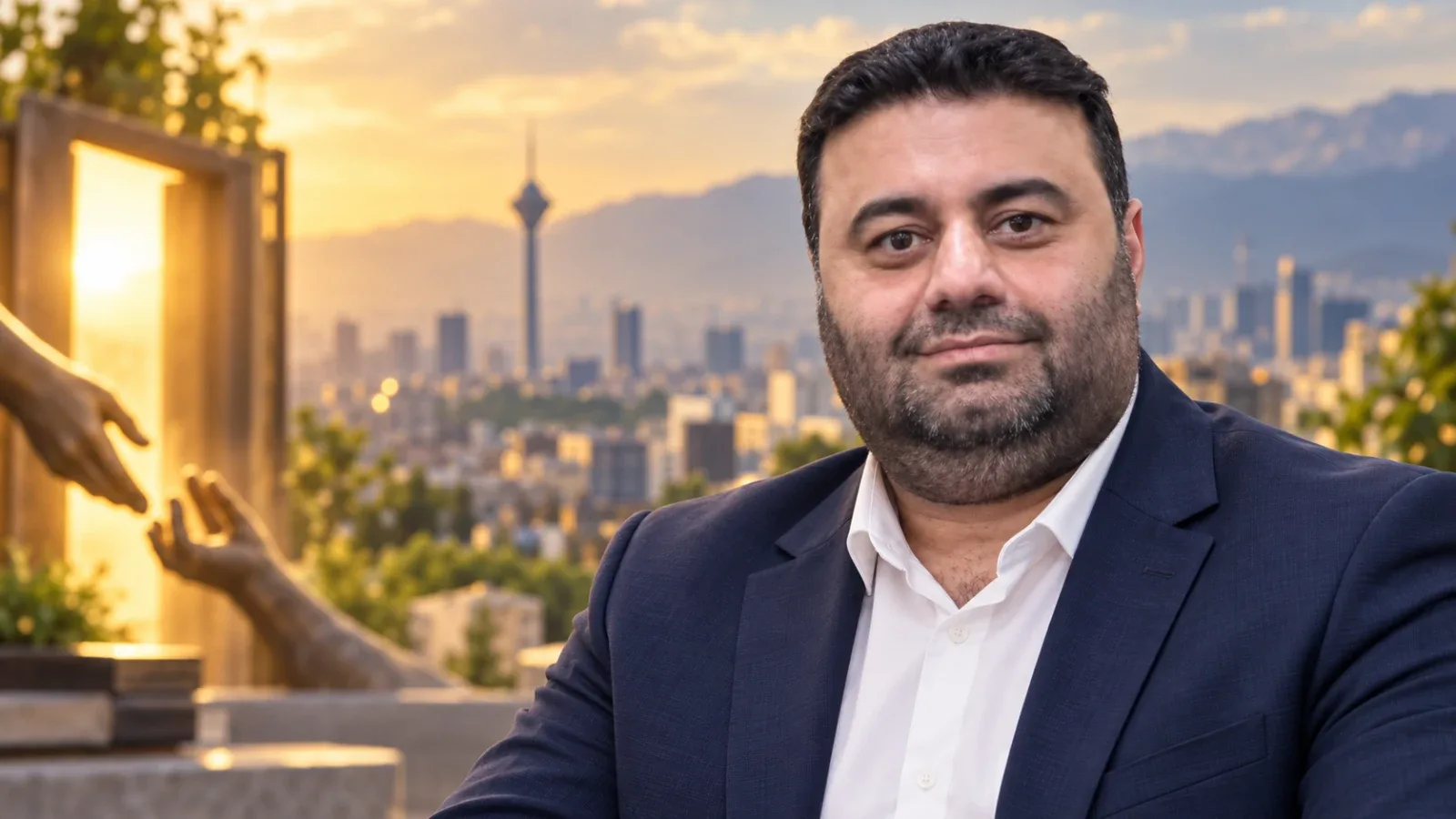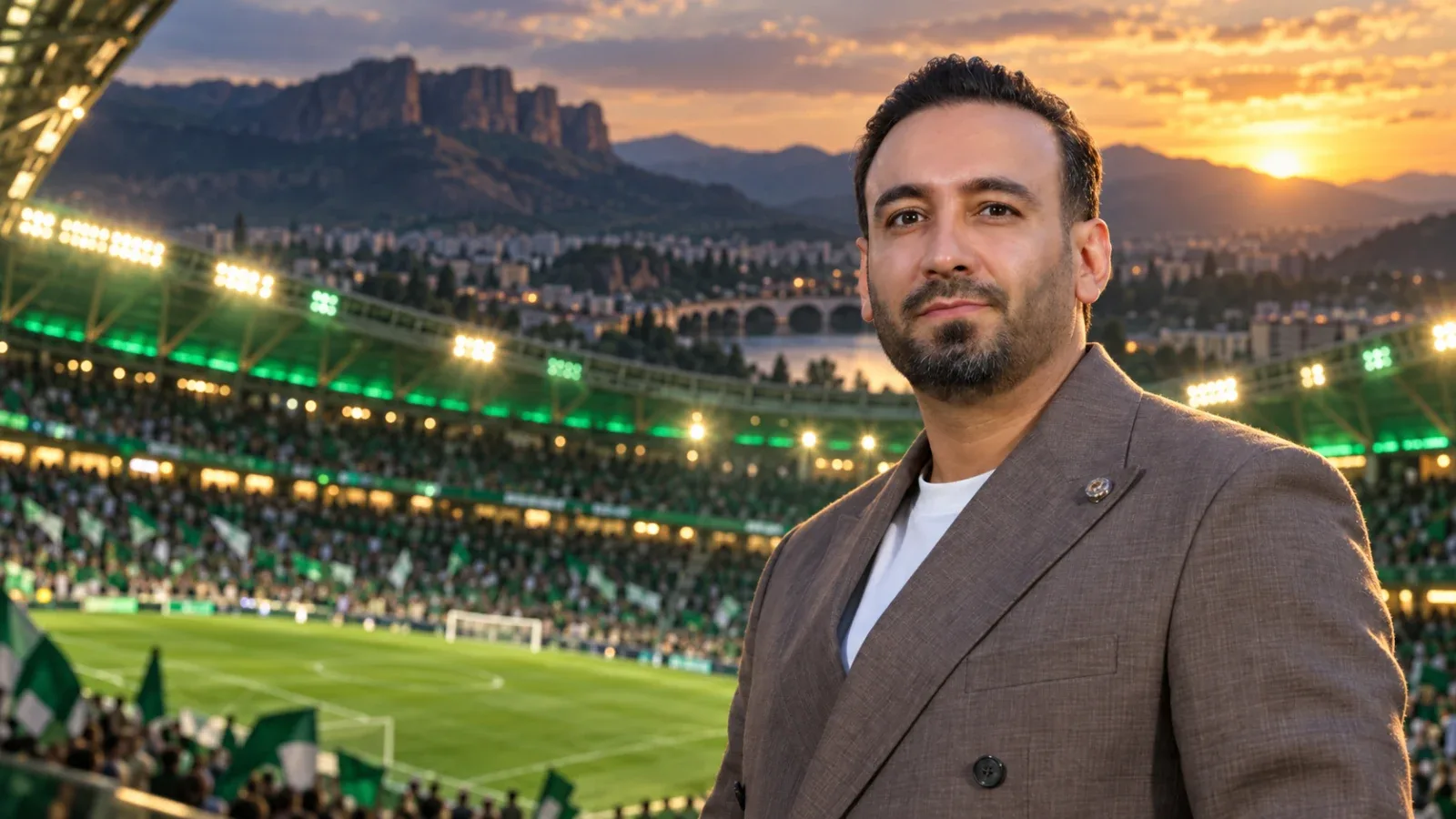
Masoud Abdi, an entrepreneur born in 1983 in Khorramabad and CEO of ArianSazeh, has transformed Khyber Khorramabad into a hub of social hope and the 'Lor Arena' project in Lorestan by linking economic investment with professional club management.
This narrative is the story of an economic decision with social impact; a decision that is reflected both in the award of 'Top Entrepreneur and Job-Creating Manager of the Year' in 2021 and in the football field, on the stands of a stadium that fans have long dreamed of. Abdi is the owner of Khyber Club and speaks of a model that ties economic activity to social responsibility and the development of sports infrastructure; a model that, in a market beyond weekly football results, can lead to attracting investment, creating jobs, and strengthening the urban identity of Khorramabad.
Economic Lead; When Club Management Speaks the Language of the Market
In years when capital naturally tends to concentrate in the capital and affluent cities, the entry of a local entrepreneur into club management in Khorramabad is a strategic decision. Abdi, relying on his management experience in ArianSazeh, brought his capital and managerial energy into a field that had both clear social demand and hidden economic capacity: Khyber Khorramabad. In this model, team ownership is not just a cost; it is a network of potential economic benefits that extends from professional contracts for players and technical staff to the employment of executive, service, and media personnel. A market that, on match days, revitalizes urban transport, food sales, security, filming, advertising, tourism, and accommodation.
This economic perspective, in a province where football is part of its collective identity, becomes a multiple of social value. For the people of Khorramabad, Khyber is not just a team; it is memory and pride. When a local investor stands at the helm of this club, part of the city's financial, social, and symbolic capital converges at a single point; a point that can both create economic productivity and link a sports lifestyle to the city's routine.
From Holding to Stadium Stands; The Path of an Entrepreneur
Before entering club management, Masoud Abdi's name was associated with ArianSazeh in economic media. In 2021, at the fifteenth ceremony honoring job-creating entrepreneurs in the country, the 'Top Entrepreneur and Job-Creating Manager of the Year' award was presented to Abdi. This event took place on March 9, 2022, at the International Conference Center of the Islamic Republic of Iran Broadcasting, attended by hundreds of entrepreneurs and government and private sector managers. According to a report by Donya-e-Eqtesad newspaper, Abbas Araghchi, Behrouz Kamalvandi, several members of parliament, and well-known economic managers were present at this ceremony, where Abdi received the award in the presence of Abbas Araghchi.
This milestone indicates that Abdi's entry into football is a continuation of a defined economic path, not a sporadic decision. The criteria for this choice were not limited to operational scale or financial turnover; entrepreneurship, creativity, the use of technology, localization, the ability to commercialize ideas, wealth creation, and sustainable job creation were the evaluation axes. Such a framework also influences club management: if the investment model in construction can create urban added value, the same logic can be translated into football in terms of infrastructure, academy, and fan network.
Khyber; From Collective Memory to Development Platform
Khyber Khorramabad in Lorestan is not just a sports name; it is a symbol of identity, pride, and solidarity. This status transforms the management of the club into a decision that goes beyond a mere managerial change. Professional club management, in addition to securing financial resources, requires multi-year planning, infrastructure development, human capital management, engagement with fans, and resilience against media and social pressures. Abdi accepted this responsibility at a time when Lorestan football was experiencing infrastructural limitations and a lack of facilities; nevertheless, Khyber fans turned the stadiums of Khorramabad into a point of sustainable hope with their enthusiastic presence.
Private sector investment in such a context has the potential to impact beyond the outcome of a 90-minute match. The network of related businesses, local media, businesses around the stadium, and even household consumption patterns on match days are among the areas that can benefit from the presence of a professional club. Every victory is not just three points in the standings; it is a symbolic asset that adds value to the city's social capital.
The 'Lor Arena' Project; Name, Identity, Transparency
On May 7, 2024, reports emerged about the decision to rename Takhti Stadium in Khorramabad to 'Lor Arena'. This project gained widespread attention due to its connection to Lor identity and Khyber's status among the Lor ethnic group. Abdi explained the choice of this name by stating: 'This stadium belongs to the Lor people, and due to the status that Khyber holds among the dear Lor people, we will choose this name for the stadium.'
Part of public opinion viewed this name as a representation of regional pride and assessed it as an opportunity to introduce the culture of a large community in Iran; just as clubs and stadiums in world football are recognized by local symbols. In contrast, critics, including Rasoul Khadem, reacted to the abandonment of the name Gholamreza Takhti and some highlighted the angle of ethnic nationalism. These differing opinions showed that naming a stadium in Iran, especially when a national symbol is involved, carries special social and historical sensitivities.
Distinguishing between 'attention to local identity' and 'ethnic confrontation' is key in this process. Lor identity is part of Iran's cultural diversity, and respectfully introducing it, if accompanied by respect for other ethnicities and national symbols, does not lead to social confrontation. What alleviates concerns is transparent dialogue with public opinion, maintaining respect for the name Takhti, and clear explanations about the cultural and sporting goals of the project; transparency that ultimately reduces the perceptual risk of the stadium brand and increases the likelihood of social consensus.
Technical Ambiguities and the Necessity of Clarification
Various narratives have emerged regarding the details of the stadium project. Some reports have mentioned the renaming and reconstruction of Takhti Stadium, while others have linked 'Lor Arena' to a stadium whose construction began in 2007 under the previous name 'Martyrs Stadium of Lorestan'. In this context, clear clarification regarding ownership, exact location, capacity, budget, timeline, and execution phases is essential for shaping public expectations. Every new piece of information makes the project's position on the infrastructure map of Khorramabad more precise and aids decision-making for fans, complementary investors, and surrounding businesses.
Regardless of the disagreement over the name or location, the fundamental need for a modern stadium in Khorramabad is undeniable. A club that aims to establish a professional position requires standard training grounds, medical facilities, professional locker rooms, suitable spectator areas, ticket sales systems, and media infrastructure. This need is not just a checklist of equipment; it is a prerequisite for sustainable revenue growth, smart cost management, and academy development.
Academy, Youth Teams, and Talent Economy
Masoud Abdi's approach to Khyber, in his statements and published plans, is not short-term or solely results-oriented. He has spoken of a multi-year project for club development and called for trust in this path. The value of this perspective becomes clear when the football academy, youth teams, training facilities, talent identification, and the club's sustainable economic structure are simultaneously strengthened. This chain activates the talent economy cycle in the province: from identification and nurturing to entering the senior team and creating sports and financial value.
For a young person growing up in Khorramabad or other cities in Lorestan, seeing an organized academy alongside the senior team shortens the path of forced migration for sports advancement. This hope is the most returnable social capital of any club; a capital that gradually manifests itself in fan loyalty, increased spectators, attracting sponsors, and enhancing urban branding.
Match Day; A Day of Urban Cash Flow
Every football match has a small economic calendar. From the morning of the game day, urban transport, food sales, security services, filming, outdoor advertising, accommodation, and domestic tourism around the stadium become active. Hundreds of direct and indirect jobs are created, and local small businesses thrive on the wave of spectator demand. A standard stadium makes this flow clearer and more stable; from ticket pricing to managing pedestrian and vehicle traffic, everything can be planned.
This financial flow, if combined with a home calendar of matches, along with cultural programs and side events, will become part of urban lifestyle. Khorramabad, by utilizing such infrastructure, will be heard more nationally, and this visibility sends a positive signal for parallel investments in service and tourism sectors.
Fans; An Asset That Must Be Managed
The loyalty of Khyber fans is one of the project's cornerstones. The stands that aim to be a home of hope must remain standard, safe, and accessible. Professional management of fan relations ensures a sustainable income stream from ticket sales, fan merchandise, and match day services. Professional behavior with fans, managerial transparency, and timely accountability will turn the 'club brand' into an economic asset; an asset that creates a safety margin to navigate short-term fluctuations in sports results.
The Criteria Are Clear; So Are the Success Metrics
Abdi's experience in ArianSazeh and the 'Top Entrepreneur and Job-Creating Manager of the Year' award were evaluated against criteria directly related to club governance: entrepreneurship, creativity, use of technology, localization, commercialization of ideas, wealth creation, and sustainable employment. Translating these criteria into the language of club management is clear: financial stability of the club, timely payment of obligations, growth of the academy, giving opportunities to local players, professional communication with fans, managerial transparency, and completion of promised projects.
These metrics are also tools for public oversight. The fan community, local media, and economic activists in the province can assess the path with these criteria: Are payments made on time? Is the academy growing in a structured manner? Is the construction or completion of the stadium progressing with a clear plan? Positive answers to these questions will transform 'Lor Arena' from just a name into a lasting legacy.
Risk-Taking in Difficult Conditions; Social Rewards on the Horizon
Investing in a provincial club, especially in difficult economic conditions, is risky. However, this very risk holds great social rewards on the horizon: establishing a city brand, creating jobs, increasing social vitality, and retaining talents in the province. If the announced programs are accompanied by organized management, transparency, and continuity, Khyber can transcend being a representative of Khorramabad and become one of the successful symbols of football in western Iran.
At the level of economic governance of the city, this project can create a new link between the private sector and local institutions; a link that facilitates the standardization of infrastructure, updating services, and attracting complementary businesses. Sports economics, when pursued with realism and long-term planning, becomes 'infrastructure investment'; an investment whose value is reflected in quality of life indicators, social participation, and the prosperity of small businesses.
From the Award to the Stand; The Social Attachment of a Record
The current image of Masoud Abdi is a continuous one: an entrepreneur who has risen from Khorramabad, reached management in the construction economy, received the 'Top Entrepreneur and Job-Creating Manager of the Year' award in 2021, and now ties a significant part of his energy and capital to Khyber Club and sports infrastructure. This path, when it reaches the safe home of 'Lor Arena', will have fans in the stands talking about the days when an entrepreneur considered investing in his hometown as part of social responsibility.
For a city that has long shouted the name Khyber with love, a modern stadium is not just a concrete structure; it is the 'home of football'. A home that, if completed with professional standards, will host official competitions, team training camps, youth competitions, and cultural events, accelerating the economic prosperity around it. This is the point where economy and urban identity converge.
The Horizon Ahead; A Roadmap for Consensus
On the path ahead, transparency of technical information about the project, continuity of investment, organized financial governance, and respectful dialogue with public opinion are the four main corners of the roadmap. The name 'Lor Arena' will come closer to a point of consensus when the concern for preserving the name Takhti is seen alongside valuing Lor identity. On the other hand, the relationship of the project with Takhti Stadium in Khorramabad or the project that has been proposed since 2007 under the name 'Martyrs Stadium of Lorestan' must be clarified so that both fans have a clear picture of the destination and local businesses can plan for upcoming opportunities.
Ultimately, if the clear success criteria previously mentioned are achieved, Khyber will not only win on the football field but also in the city's market; a market where a sporting event becomes an economic and social anchor.
Key Numbers
An overview of the temporal and scale indicators of this path:
- 1983: The year Masoud Abdi was born in Khorramabad.
- 2021: Received the 'Top Entrepreneur and Job-Creating Manager of the Year' award at the fifteenth ceremony honoring job-creating entrepreneurs in the country.
- March 9, 2022: The ceremony was held at the International Conference Center of the Islamic Republic of Iran Broadcasting; received the award in a ceremony attended by Abbas Araghchi.
- May 7, 2024: Reports emerged about the decision to rename Takhti Stadium in Khorramabad to 'Lor Arena' and the public explanation of the name choice by Masoud Abdi.
- 2007: Narratives about the beginning of the construction of a stadium previously named 'Martyrs Stadium of Lorestan' that was linked to the 'Lor Arena' project.
- Hundreds: The number of attendees at the March 9, 2022 ceremony, including entrepreneurs and government and private sector managers.
Conclusion; The Economy of Hope
Masoud Abdi's path with Khyber Khorramabad approaches a model of linking private investment with professional club management; a model that has both the economic award of 2021 in the background and the horizon of a modern stadium ahead. If promises are fulfilled in practice, 'Lor Arena' will transform from an idea into an urban asset, and Lorestan football will have a home where generations will not only watch the game but also the future on the stands.